The alluvial fans spreading from the Franklin Mountains toward the Rio Grande create two very different permeability profiles in El Paso. On the west side, coarse piedmont gravels drain almost instantly. Move east into the Hueco Bolson basin and you hit fine silts and clays where water just sits. A single design assumption for seepage across town is a risk no experienced engineer takes. The team here quantifies that contrast directly. We run Lefranc tests in soil and Lugeon tests in fractured rock to give you the site-specific hydraulic conductivity numbers. That data feeds straight into dewatering plans, basement waterproofing design, and cut-off wall specifications. It also pairs logically with grain-size analysis when you need to correlate field results to theoretical permeability from gradation curves.
A five-stage Lugeon test reveals more about fracture connectivity than a dozen core logs. It is the difference between guessing and knowing.
Methodology and scope
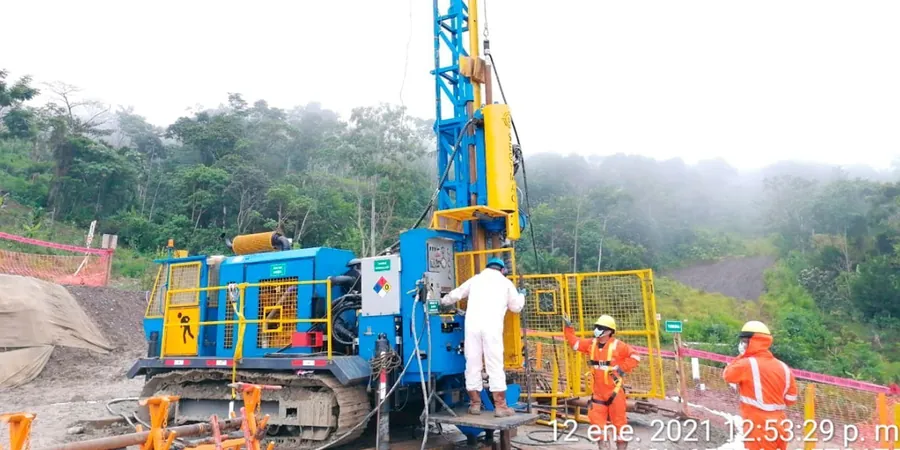
Local considerations
A four-story mixed-use building going up on Mesa Street hit unexpected groundwater during excavation. The geotechnical report had assumed low permeability based on lab tests of reconstituted samples. Field conditions were different: thin sand seams within the clay transmitted water laterally from a leaking irrigation canal two blocks away. The contractor faced a flooded excavation and a two-week delay. Our team mobilized a Lefranc testing program that same week. We identified the permeable layers precisely, measured in-situ K values, and redesigned the dewatering system around real numbers. The takeaway is not that lab tests are wrong. It is that remolded samples erase fabric, fissures, and thin permeable stringers that control flow in the field. El Paso’s basin deposits are notorious for this. A field permeability test catches what the split spoon misses.
Applicable standards
ASTM D4630-19 (Standard Test Method for Determining Transmissivity and Storage Coefficient of Low-Permeability Rocks by In Situ Measurements Using the Constant Head Injection Test), ASTM D6391-11 (Standard Test Method for Field Measurement of Hydraulic Conductivity Using Borehole Infiltration), IBC Chapter 18 (Soils and Foundations)
Associated technical services
Lefranc Test (Soil)
Constant or falling head test in a cased borehole with an open or screened interval. Measures hydraulic conductivity in soil directly. Ideal for alluvial deposits, basin-fill silts, and sandy layers where undisturbed sampling is difficult.
Lugeon Test (Rock)
Multi-stage packer injection test in bedrock. Five pressure steps reveal flow regime: laminar, turbulent, dilation, or washout. Essential for dam foundations, tunnel alignment, and grouting design in the Franklin Mountain limestone.
Packer Testing Program Design
We specify interval depth, packer configuration, and pressure sequence based on core logs and project objectives. Includes data interpretation and hydraulic conductivity reporting.
Typical parameters
Frequently asked questions
How much does a field permeability test cost in El Paso?
Budget between US$600 and US$1,090 per test interval, depending on depth, access, and whether it is a Lefranc or Lugeon configuration. A full multi-stage Lugeon program with five pressure steps runs toward the higher end. We provide a fixed-price scope after reviewing your borehole logs.
What is the difference between a Lefranc test and a Lugeon test?
A Lefranc test measures hydraulic conductivity in soil using a constant or falling head of water in a borehole. A Lugeon test is for rock: water is injected under pressure into an isolated interval sealed with packers. Lugeon tests run multiple pressure stages to understand fracture behavior.
How long does the test take on site?
A single Lefranc test typically completes in one to two hours once the borehole is ready. A five-stage Lugeon test in rock takes longer, usually half a day per interval, because each pressure stage must reach steady flow conditions before stepping up or down.