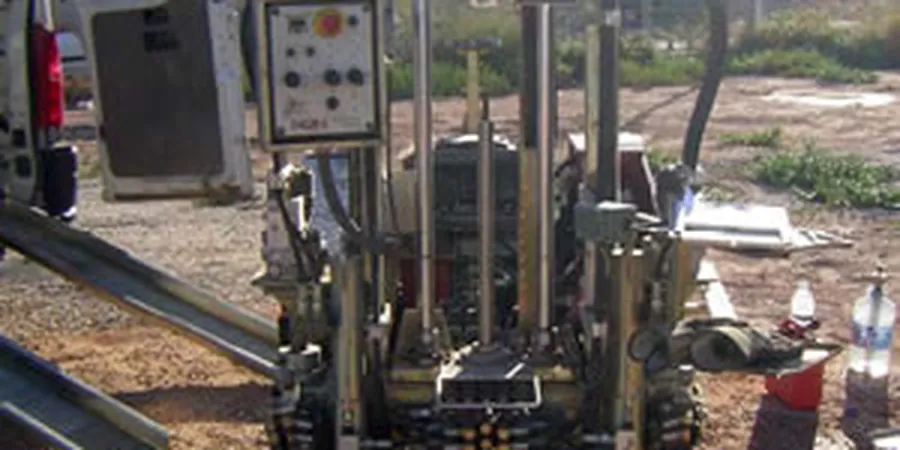
On a recent commercial project near the Cielo Vista corridor, the design team needed to confirm the depth to caliche without losing fines during sampling. The solution was a truck-mounted cone penetration test that pushed through interbedded silts and cemented layers in under four hours, delivering a continuous sleeve friction and pore pressure log. El Paso’s subsurface is shaped by basin-and-range tectonics and episodic alluvial deposition, which means the contact between soft playa clays and dense gravels can shift within a few hundred feet. In our experience, traditional SPT alone often misses those transitions. A CPT test captures the subtle changes in tip resistance that signal a bearing stratum or a potential settlement zone, while a companion MASW survey ties the stratigraphy to shear-wave velocity for site class determination per IBC 2021.
A CPT sounding gives us a near-continuous digital profile of soil stiffness and drainage behavior, which is essential where caliche layers cap softer, moisture-sensitive deposits.
Methodology and scope
Local considerations
IBC 2021 Section 1803 requires that foundation investigation account for the variability of soil properties across the site. In El Paso, the transition from windblown sand to basin-floor clay can occur within a single city block, and missing a loose, saturated sand lens beneath a stiff crust has led to differential settlement claims on tilt-wall warehouses near the Border Highway. CPT soundings spaced on a 50-foot grid catch those lenses because the method records pore pressure dissipation—a direct indicator of drainage and potential excess pore pressure buildup during loading. ASCE 7-22 also links site class determination to the average shear-wave velocity in the upper 100 feet; when CPT data is paired with downhole seismic measurements, the combined dataset satisfies both strength and stiffness requirements in one mobilization. Skipping CPT on a variable site often results in overdesigned foundations or, worse, an underpredicted settlement magnitude that appears only after monsoon rains saturate the upper profile.
Applicable standards
ASTM D5778-20: Standard Test Method for Electronic Friction Cone and Piezocone Penetration Testing of Soils, IBC 2021 Section 1803: Geotechnical Investigations, ASCE 7-22 Chapter 20: Site Classification Procedure for Seismic Design, TxDOT Tex-132-E: Cone Penetration Test for Foundation Design
Associated technical services
Standard CPT Soundings
Truck-mounted cone penetration with qc and fs logs, ideal for shallow foundation design in the Eastside and Lower Valley commercial corridors.
Piezocone (CPTu) with Dissipation
Includes u₂ pore pressure measurement and staged dissipation tests to determine consolidation characteristics in silty floodplain soils near the Rio Grande.
Seismic CPT (SCPT)
Downhole geophone array measures shear-wave velocity during pauses in penetration. Used to establish IBC site class and evaluate liquefaction triggering per Idriss & Boulanger (2014) procedures.
Typical parameters
Frequently asked questions
How deep can a CPT rig push in El Paso's caliche layers?
Caliche—the calcium-carbonate cemented soil common across the Franklin Mountains piedmont and West Mesa—often stops CPT penetration between 15 and 40 feet, depending on the degree of cementation and the rig's reaction mass. Our 20-ton truck-mounted system typically achieves refusal on massive Stage IV caliche. In those cases, we pre-drill through the cemented horizon with a hollow-stem auger and resume CPT below it, or pair the sounding with a test pit to visually log the caliche thickness.
What does a CPT test cost for a typical El Paso residential lot?
For a single-family home site requiring two to three soundings to 20 or 30 feet, CPT service in the El Paso area generally runs between US$170 and US$270 per sounding, depending on mobilization distance from our central yard and whether piezocone or seismic modules are needed. Projects on the far Westside or in the Upper Valley often fall at the upper end of that range due to travel time.
Can CPT replace soil borings entirely for a foundation design report?
In many El Paso basin settings, yes—when combined with targeted Atterberg limits testing on thin-wall samples taken at key depths. CPT provides continuous stratigraphy and engineering parameters, but some jurisdictions and structural engineers still require a minimum number of physical samples for moisture content and plasticity index verification. Our standard practice is to supplement CPT with one soil boring per 2,500 square feet of building footprint to satisfy local plan review requirements.