Geotechnical laboratory testing in El Paso provides the essential physical characterization of soils and aggregates that govern foundation design, slope stability, and earthwork quality. The region's basin-fill deposits, alluvial fans, and expansive clay seams demand precise index property measurement per ASTM D422 and D4318 standards. Our grain size analysis (sieve + hydrometer) quantifies the full particle size distribution from coarse gravels to fine silts and clays, while Atterberg limits define the plasticity range and moisture sensitivity of fine-grained soils critical for predicting shrink-swell behavior common in the Chihuahuan Desert environment.
These tests directly support residential and commercial site development, roadway subgrade evaluation, and retaining wall design across the Paso del Norte region. Accurate classification through liquid and plastic limit determination and complete gradation curves enables engineers to assess frost susceptibility, drainage characteristics, and compaction potential. Every report delivers defensible data for TxDOT and local municipal submittals, forming the basis for shallow foundation sizing, pavement structural numbers, and earth retention system parameters.
A well-designed anchor in El Paso soil is one that survives the monsoon cycle without losing pre-stress.
Methodology and scope
Local considerations
The Scenic Drive landslide complex is a real reminder that El Paso's mountain-front geology doesn't forgive shortcuts. Anchored retaining walls along steep cuts in the Franklin Mountains face debris flow hazards and fractured rhyolite with unpredictable groundwater seepage after storms. If a passive anchor is placed in a zone that later saturates, the bond strength can drop by 30% or more within hours. The biggest risk in the downtown and UTEP areas is tieback failure under phased excavation loads—the anchor head remains intact while the grout column creeps in saturated silt. We insist on sacrificial lift-off testing on site, not just the minimum code requirement, because the cost of a failed shoring wall on a confined urban lot runs well into six figures. Verification through slope stability analysis is non-negotiable when the anchor is part of a global stabilization scheme.
Explanatory video
Applicable standards
PTI DC35.1-14 Recommendations for Prestressed Rock and Soil Anchors, ASTM D4435-13e1 Standard Test Method for Rock Bolt Anchor Pull Test, ASTM A416/A416M-18 Standard Specification for Low-Relaxation, Seven-Wire Steel Strand for Prestressed Concrete
Associated technical services
Active Anchor Systems
Pre-stressed tiebacks and rock anchors for permanent retaining structures. We design the free and bond lengths to transfer load beyond the active wedge, with lock-off procedures that compensate for wedge seating loss. Suited for deep basements and bridge abutments.
Passive Anchor Solutions
Unbonded dowels and soil nails for temporary shoring and slope reinforcement. These systems mobilize resistance through ground deformation, which we calibrate to El Paso's granular colluvial soils so movement stays within service limits.
Typical parameters
Frequently asked questions
What is the cost range for anchor design and testing in El Paso?
For a typical project requiring anchor design, submittal preparation, and on-site load testing, the fee ranges from US$1,100 to US$4,150 depending on the number of anchors and the complexity of the access conditions.
Do you specify both active and passive anchors for the same project?
Yes, it's common in El Paso. We might use active tiebacks to control movement on a shoring wall adjacent to an existing building, while passive soil nails stabilize the cut slope above it where some deformation can be tolerated.
How do you verify the bond strength in El Paso's colluvium?
We run performance and proof tests per ASTM D4435 on sacrificial anchors. The test data is correlated with the site investigation, often cross-referenced with SPT blow counts or CPT tip resistance from the same borehole location.
What corrosion protection level is required for permanent anchors here?
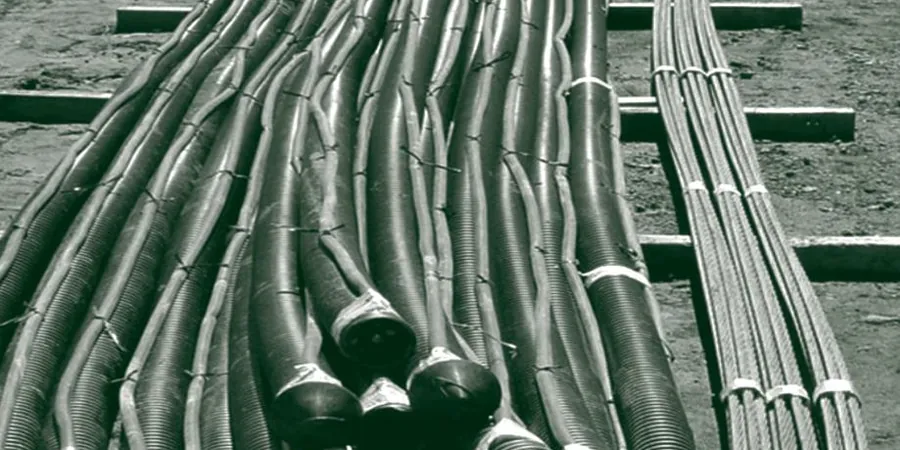
Given the occasional presence of sulfates in the basin soils and the wet-dry cycles, we specify Class II protection—a fully encapsulated tendon inside a corrugated sheath with grout filling the annular space—for any permanent installation.